


 Q. What is botulinum toxin or Botox?
A. Botulinum toxin has been used for over 25 years and is a type of purified protein produced by the Clostridium botulinum bacterium. It is very safe and is injected directly into facial muscles in very tiny amounts during treatment.
Q. How does it work?
A. Botulinum toxin works by blocking the transmission of nerve impulses to the facial muscles that have been injected. This makes the muscles less active and therefore softens and smooths the appearance of persistent lines and wrinkles
Q. How many treatments will I need?
A. In most cases patients can see a real difference after one treatment. This is because botulinum toxin works gradually, smoothing, and softening lines and wrinkles for up to 4 months. Every face is unique, of course, and we will advise you on how many treatments you are likely to need and how often, depending on the results you'd like to achieve.
Q. How long does Botulinum Toxin work for?
A. The effects of botulinum toxin often last up to 4 months depending on the patient. If you decide to stop treatment, any permanent lines and wrinkles will gradually return.
Q. Is the treatment painful?
A. It is very rare for treatment with botulinum toxin to be painful. Most patients experience a feeling of slight discomfort if at all during the treatment itself but that's all. Rest assured we will talk you through what to expect before your first injection, so you'll be fully prepared prior to treatment.
Q. I'm worried that I'll end up with a "Trout Pout"
A. Rest assured following an extensive assessment, we aim to meet your expectations being mindful not to over contour the lips. In this way, we avoid over bulking out this sensitive area.
Q. Can I go back to work after the procedure?
A. With botulinum toxin injections at worst you will have some redness which will subside after a few hours. Following Dermal Filler injections of the mouth area or nose to mouth area you may experience temporary mild bruising and swelling so you may decide not to return to work that day.

Q. What are dental implants?
A. A dental implant is a titanium metal rod which is placed into the jawbone. It is used to support one or more false teeth. In practice, both the false teeth and their supporting rod are known as "implants".
Q. Are implants safe? How long will they last?
A. Implants are a well-established, tried-and-tested treatment. 90 per cent of modern implants last for at least 15 years.
Q. I have some of my own teeth. Can I still have implants?
A. Yes. You can have any number of teeth replaced with implants - from one single tooth to a complete set.
Q. Can implants always be used to replace missing teeth?
A. It depends on the state of the bone in your jaw. Your dentist will arrange for several special tests to assess the amount of bone existing in that area of your jaw. If there is not enough, or if it isn't healthy enough, we would first have to graft bone into the area first, before proceeding with the replacement of the tooth via dental implant.
Q. Do implants hurt?
A. Placing the implants requires a small operation. This can be carried out under local anaesthetic with sedation or with a general anaesthetic. You will not feel any pain at the time, but you may feel some discomfort during the week following the surgery. This is usually because of the stitches in place, and the normal healing process.
Q. Can I have the new teeth straight away?
If you are having one, two or three teeth replaced, you will have a temporary restoration in the meantime. If you have complete dentures, then you can wear them throughout the healing period once they have been adjusted after the surgery.
Q. How long does treatment take?
A. It takes about 12 months from the initial assessment to the time when the artificial teeth or dentures are finally attached to the implants. However, if only the lower jaw is involved then it may only take around 5 months.
A lot depends on how complicated your treatment is. Your dentist will be able to give you a timetable once the surgery has been done.
Q. Are the teeth difficult to clean?
A. Cleaning around the teeth attached to the implants is no more difficult than cleaning natural teeth. However, there may be areas that give you problems and your dentist will show you methods to help.
Q. If I had gum disease when I had my own teeth, will I get it with the teeth attached to the implants?
We recommend you visit our dental hygienist if you are struggling with gum disease.
Q. Can I take the teeth out if they are fixed to implants?
A. Most artificial teeth attached to implants can only be placed and removed by the dentist. However, if you have complete dentures fixed to the implants by bars, then you'll be able to take them out for cleaning.
Q. Do the implants show?
A. Your dentist will make sure that the implants won't show during all normal movements of the mouth and lips. You will need to be able to see them, so that you can clean them properly.
Q. Do I have an implant for each missing tooth?
A. No, unless you're only having a single tooth replaced. Normally, five or six implants are used to replace all the teeth in one jaw, as each implant can usually support two teeth. For a few missing teeth, two or three implants may be used.
Q. What if I get hit in the face?
A. Implants and the teeth they support can be damaged by an accident in the same way that natural teeth can. However, if the false teeth are damaged and the remnants are left in the bone then they may be more difficult to remove than natural teeth would be. After healing, new false teeth can then be placed alongside the fragments.
Q. What happens if the implant does not bond (integrate) with the bone?
A. This happens very rarely. If the implant becomes loose during the healing period or just after, then it is easily removed and healing takes place in the normal way. Once the jaw has healed, another implant can be placed there. Or, the dentist can make a bridge, using the implanted false teeth that have 'taken'.
Q. Is the treatment expensive?
A. Unfortunately, yes. However, in many situations, the cost of the treatment is only a little more than the cost of more conventional treatment with crowns and bridges.
There are advantages to it, too. An implant to replace a single tooth avoids the need to cut down the teeth either side for crowns to support a bridge. Normal dentures often mean you can't eat or speak well, due to the dentures moving about. But teeth attached to an implant don't cause this problem.
Q. Where do I get this treatment?
A. Talk to your dentist, so you can be referred to a specialist for assessment and treatment. Your dentist may already carry out some or all of this type of treatment and will give you the advice you need.

Q. How long does this treatment take?
A. Each treatment is designed for you - meaning you will receive individual personalised shields and so the treatment time varies from patient to patient, but takes no longer than traditional braces - typically taking between 3 months to 3 years.
Q. What are Invisalign invisible braces used for?
A. Invisalign braces are used to straighten teeth by repositioning teeth in an exciting way. As it is virtually invisible, no-one will ever know you are wearing braces! These braces are designed for both adults and children alike, so it can be used by anybody who would like perfect teeth without the old metal braces. This technique is usually performed for crooked teeth, gaps within teeth, twisted teeth, overbite or underbite of the jaw.
Q. What are the advantages of using Invisalign?
A. The unbelievable comfort compared to the traditional method of braces allows you to speak without affecting your speech. Perhaps more importantly, Invisalign are removable so you can take them out for an important business meeting or a hot date!
Q. How does it work?
A. The system works by using a series of wafer thin clear shields that cover your teeth, gradually moving the teeth into the correct position. Each shield is designed to be worn for approximately two weeks.
Q. What is Invisalign?
A. Invisalign is a revolutionary system for straightening crooked teeth and closing gaps between teeth. In many cases, Invisalign can get rid of the need for traditional metal-wire braces that have long been used in traditional orthodontic practice. The system utilises the latest in computerised technology and three-dimensional modelling to generate a series of clear, see-through aligners or “clear braces”. They are virtually unnoticeable, and are often referred to by many patients as “invisible braces”. The clear aligners are specially fabricated to fit your teeth exactly, and over time, they move your teeth into a position that gives you a natural-looking, straight smile.
Q. So how does the Invisalign system work?
A. It's simple:
- You wear your aligners for 22 hours a day.
- You remove your aligners to eat and brush your teeth.
- Your teeth move slowly over time.
- You change your aligners approximately every two weeks.
- You have regular progress checks with your dentist or orthodontist.
- Full treatment takes from six months to a year (sometimes 18 months).
Q. Why is Invisalign better than metal braces?
A. Comfort – metal braces are usually more painful and can cause irritation and inflammation of the gums and soft tissue. The elastic bands and tightening forces used with metal braces, can often cause discomfort. Although there may be slight discomfort when you start wearing Invisalign aligners, in general, most users find them very comfortable.
Convenience – this is probably one of the greatest advantages over traditional wire braces. You remove the aligners when you eat, thereby avoiding the problem of food getting trapped between wires and elastic bands. Invisalign also makes maintaining a good oral hygiene program much easier. With wire braces, cleaning your teeth is much more difficult – especially flossing between your teeth. The difficulty of flossing with metal braces means that most people will neglect this part of their cleaning, and this could lead to problems with bad breath, gum disease and tooth decay in the future.
Discreet – the aligners are virtually invisible to anyone unless they get very close to you, so hardly anyone will even notice that you are having treatment. This is one of the main reasons that has encouraged 1000s of adults to use the Invisalign system, as it won’t cause any disruption in their lifestyle.
Free consultation – most Invisalign-certified dentists or orthodontists offer a free initial consultation so that they can assess your problem and discuss the treatment with you, giving you an idea of estimated costs and likely treatment time, without any obligation.
Q. Can Invisalign be used for all orthodontic cases?
A. For most crooked teeth problems, including overbites, underbites, crowding, cross bites and gaps between your teeth, Invisalign works very well. However, more severe orthodontic cases, where teeth extraction is perhaps required, or there is a lot of movement needed, Invisalign may not be appropriate.
Q. What is the procedure?
A. After an initial consultation and assessment of your smile and teeth alignment, your Invisalign dentist will take an impression (mould) of your teeth using a special “dental putty” and take several photographs of your teeth and smile from different angles.
A 3D digital model of your teeth is then created at the Invisalign laboratory using a CT scanner.
Using the latest patented software, the model is used as a basis to generate a simulation of your teeth movement from their current position to the final desired position.
This simulation is then used as the basis to design your aligners, which are custom-made for your teeth and will be changed every two weeks as your teeth move little by little.
Your newly fabricated aligners will then be sent back to your dentist, along with the 3D simulation, so that you can see for yourself the expected movement of your teeth over time.
Your dentist will give you strict instructions on how to use the aligners. They must be worn for a minimum of 20 hours a day; the success of the treatment is highly dependent on your compliance as a patient and requires dedication.
You will have regular check-ups with your dentist to ensure that your treatment is going as initially planned.
Q. How much does Invisalign cost?
A. This depends on the severity of your case, where you go for the treatment and the skill of your dentist/orthodontist. During your consultation, you should be given an accurate indication of likely costs for your case. Treatment costs on average vary between £1,500 to £5,000+

Administration

Baljinder Kalsi
Receptionists

Marzena Sieczak
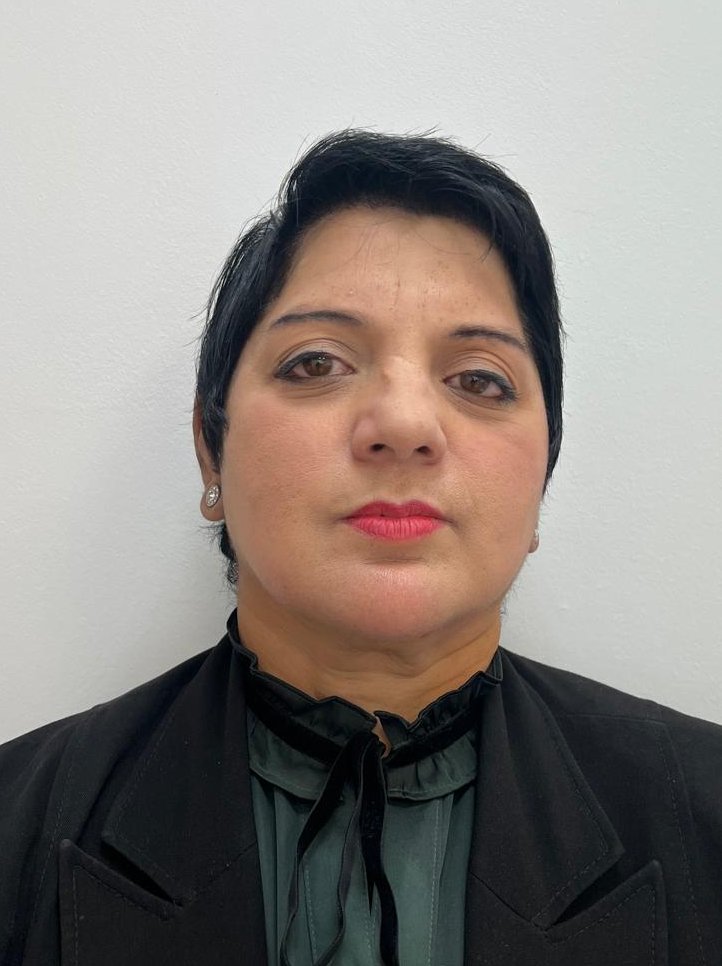
Loretta Pereira

Maurisca Span